
Infertility and Its Impacts: Highlight in the 2nd International Medical Conference
The 2nd International Medical Conference will welcome one of the leading voices in human reproduction to discuss the social and economic impacts of infertility worldwide.
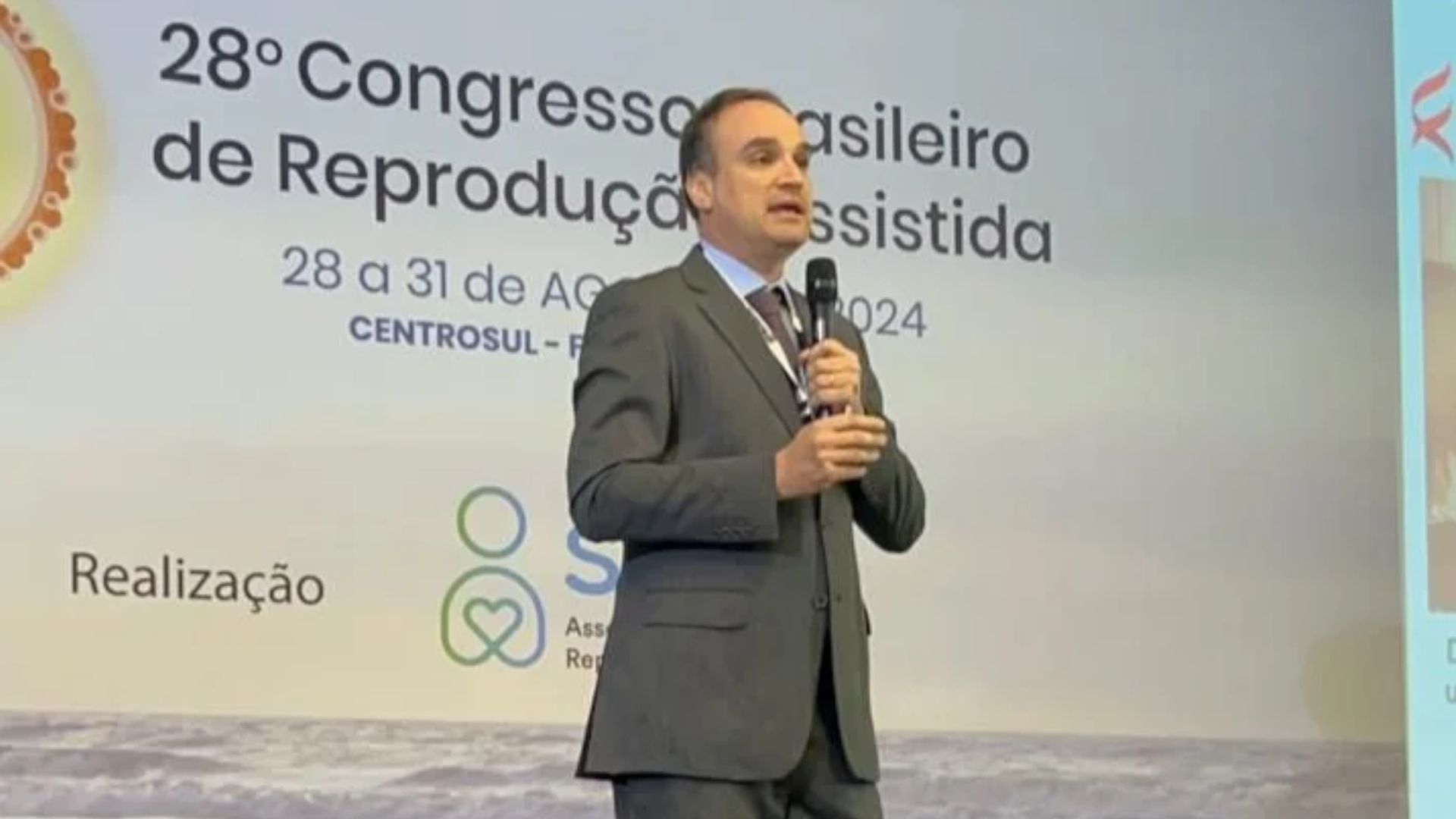
Daniel Suslik Zylbersztejn, technical manager of Fleury Fertility and doctor at Hospital Israelita Albert Einstein, is one of the confirmed speakers at the international congress, which will take place on March 12-14, 2025, in Erechim, in Rio Grande do Sul.
The challenge of infertility
Starting a family is still most people's dream. However, the desire to have children can come up against a major social and public health problem, with serious economic consequences: infertility.
According to World Health Organization (WHO), in 2023,1 in 6 people in the world it is sterile. Fertility decline, its challenges and the reversal techniques available in different countries will be addressed by Daniel Suslik Zylbersztejn at International Medical Conference.
Fertility decline and its causes
With 17 years of experience in assisted fertilization, Zylbersztejn explains that fertility decline began in some European countries, the birthplace of the Industrial Revolution, at the start of the last century.
"With industrialization, families changed their lifestyle even further and started using contraceptive methods. We can also mention the beginning of female empowerment and the postponement of pregnancy due to professional careers. These and other social changes, combined with chemical substances that contaminate air, soil and water, directly influence the human reproductive system and can result, depending on the degree, in sterility", adds Zylbersztejn.
In Brazil, the current fertility rate is from 1.66 children per woman, while the number needed to keep the population stable is 2.2 children. According to the Associação Brasileira de Reprodução Assistida, about 8 million Brazilians may be infertile.
Future impacts
The data is worrying because, at some point, the Brazilian population will begin to decline. This phenomenon can generate significant economic and social impacts, requiring new strategies for fertility preservation and public policies focused on the topic.
Treatment and challenges
The treatments for In Vitro Fertilization are still a distant dream for most people. They involve:
- High-cost medicines
- Imported inputs
- High technology in Embryology laboratories
- They are not covered by health plans or the SUS
According to the expert, this scenario is not likely to change anytime soon. He regrets that Brazil does not invest in larger-scale research on assisted reproduction, unlike more developed countries.
“Despite all this, Brazil is recognized worldwide for having a strong reproductive medicine sector, especially in assisted human reproduction”, says Zylbersztejn, who on the day March 14 will address the topic in International Medical Conference.
About International Medical Conference
The 2nd edition of the conference is organized by the Instituto Cultural Judaico Marc Chagall, the Prefeitura de Erechim, and the Polo de Turismo Histórico Judaico de Quatro Irmãos e Região.
Part of the proceeds will go towards restoring the Hospital Israelita Leonardo Cohen, the first Jewish hospital in Brazil, founded 96 years ago in the former Jewish Colony of Quatro Irmãos.
Registration and prices
Registration for the event can be done via the official website:
www.jornadamedicainternacional.com.br
Pricing:
- Medical Professionals: R$ 349.00
- Students: R$ 299.00
- Participants will receive a certificate.
Service
- Event: 2nd International Medical Conference
- Date: March 12, 13 and 14, 2025
- Venue: Centro Cultural 25 de Julho
- Address: Rua Gaurama, 210 - Centro, Erechim-RS, Brasil | ZIP code: 99700-000
More information and the complete program are available on the event's social media (@jornada.medica.internacional) and via WhatsApp:+55 (54) 99225-0596.
Press Office
Event communication is carried out by Fiamini - Integrated Communication Solutions.
- Rodrigo Dias: +55 (11) 96794-5777
- Simone Leone: +55 (11) 99679-0666
- Vania Sousa: +55 (11) 96565-4394
- Carla Fiamini: +55 (11) 94749-6747